Looking Back at Educause 2025
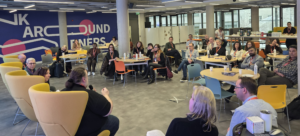
The Educuase annual conference returned to Nashville this year from the 27th – 30th October 2025, bringing together higher-education leaders, technologists, digital learning experts, and innovators from around the world. It served as a hub for learning, connection, and exploration. A chance to share ideas, tackle challenges, and reimagine what’s possible in higher-ed technology.
This year’s key theme, “Restoring Trust”, emphasised the importance of institutions demonstrating both competence and care through technology. From building secure and inclusive digital ecosystems to supporting student success with thoughtful innovation, trust emerged as a guiding principle across conversations, keynotes, and the exhibition hall.
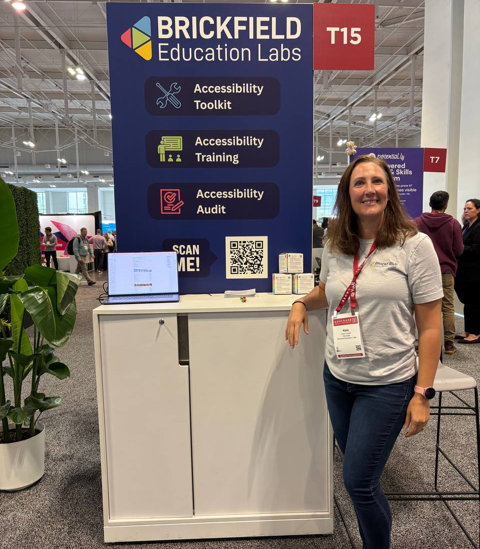
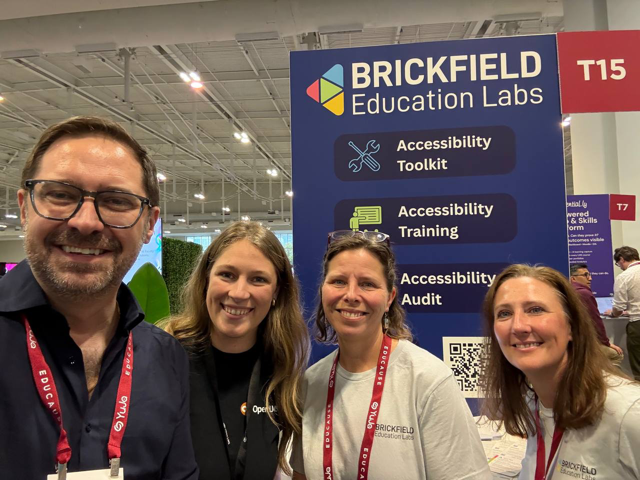
Brickfield Education Labs was proud to participate, exhibiting in the Emerging Tech Experience where we showcased our accessibility solutions including Brickfield Enable – our next gen Accessibility Toolkit, and our premium Moodle bundles. We were able to share practical guidance, explore real-world challenges, and help attendees identify actionable ways to improve accessibility for teaching and learning across their institutions.
Table of Contents
Partner Highlights
Events like Educause remind us that impact grows through collaboration. We loved spending time with our partners Open LMS and Moodle, connecting on accessibility priorities and celebrating our shared mission to advance inclusive learning for all.
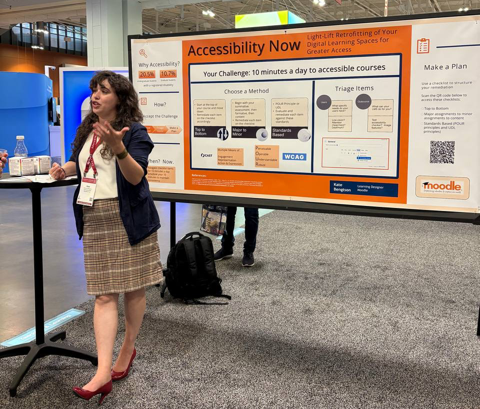
One standout moment was attending a poster presentation by Kate Bengtson from Moodle HQ, where she explored how accessible and intentional course design can strengthen learning experiences at scale. Kate shared practical strategies including structured checklists, a triage approach based on learner needs and LMS features, and the use of Moodle accessibility tools like Brickfield Education Labs. Her message was clear: small, steady improvements can create meaningful access for every learner. As Moodle partners and certified integration providers, we are dedicated to supporting the same accessibility-first practices across the Moodle ecosystem.
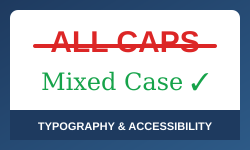
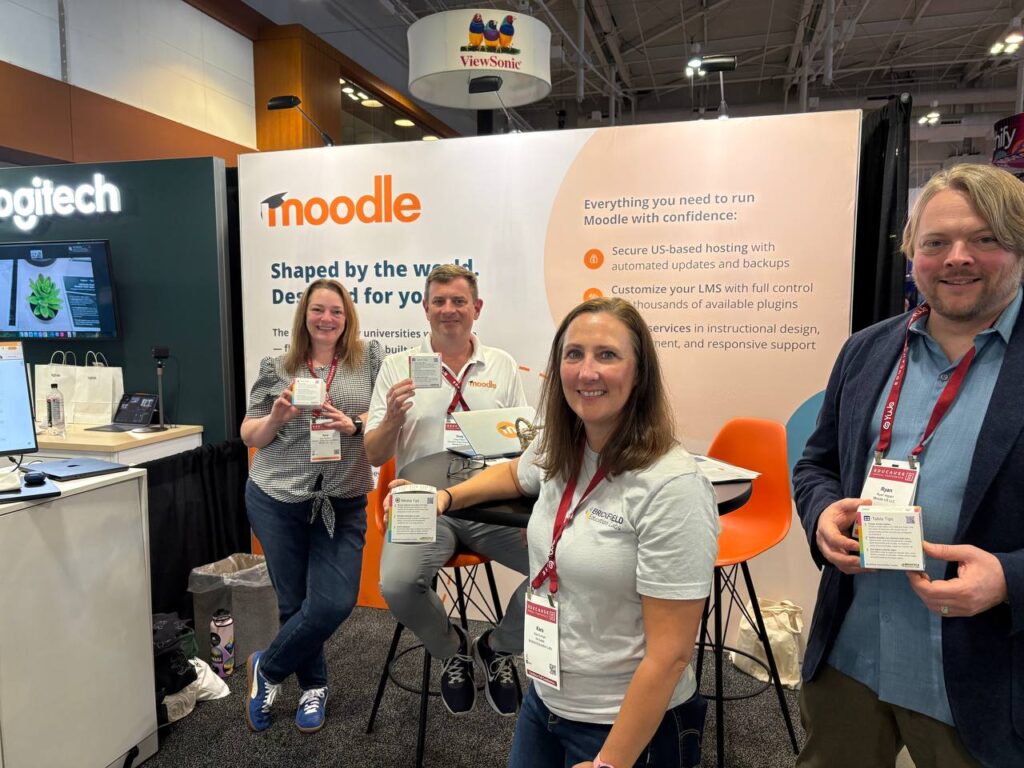
We were also delighted that Kate shared our Accessibility Tip Cubes, which are small hands-on tools created to make accessibility more approachable and engaging. Each cube offers quick prompts and best-practice reminders, from colour contrast and content structure to captions and alternative text, helping educators and students take immediate action in just a few minutes.
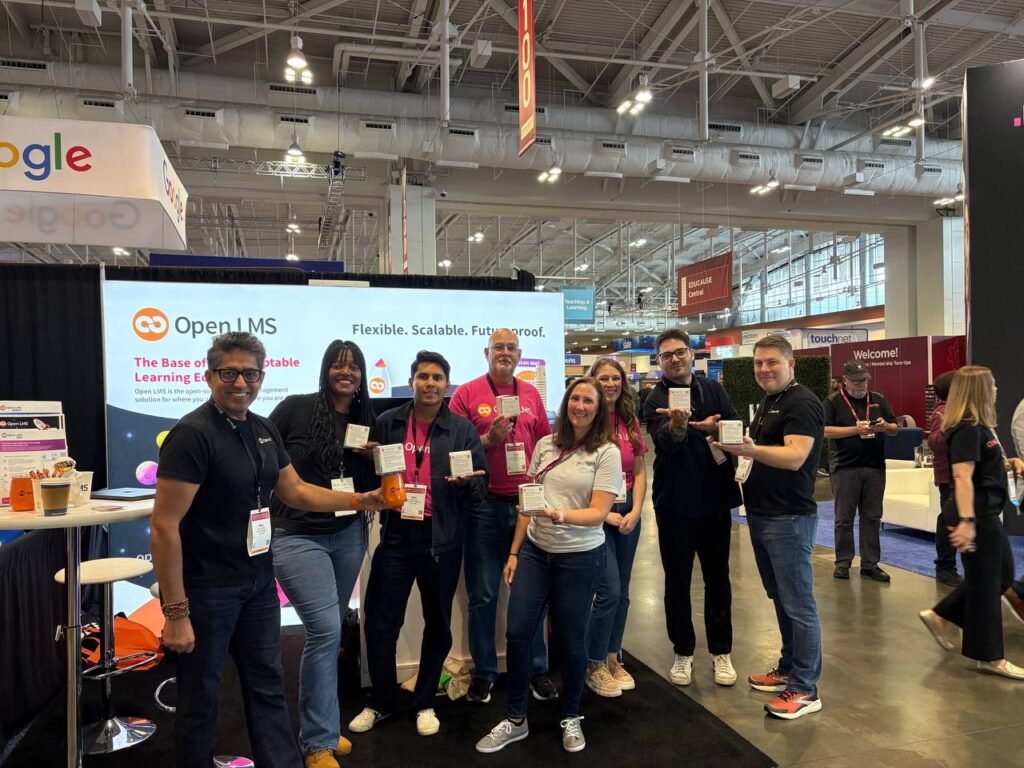
A special highlight throughout the conference was seeing our Accessibility Tip Cubes spark conversations and smiles across the hall — including at both our partners’ booths, where they were proudly held, shared, and used to inspire accessibility discussions. Our partners also took the opportunity to highlight and share our solutions with attendees, reinforcing the collaborative effort we all bring to advancing accessible learning. It was wonderful to see excitement building around such a simple, engaging tool and to witness how our shared ecosystem continues to champion everyday accessibility improvements.
Our Presence and Engagement
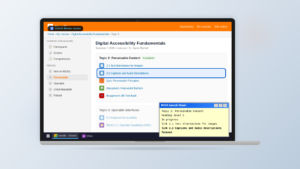
Being part of the Emerging Tech Experience gave us the ideal platform to share how our next-generation accessibility solutions support institutions at every stage of their journey. Our next gen Accessibility Toolkit, Brickfield Enable, goes beyond fixing content issues — it empowers institutions with deep insight into accessibility trends, patterns, and progress over time. With visual analytics, performance tracking, and seamless integration into Moodle workflows. Enable supports monitoring, reporting, and continuous improvement at scale. It’s not just a toolkit — it’s a strategy for building more equitable digital learning environments.
Alongside our platform capabilities, we also showcased our premium Moodle bundles and accessibility training, designed to help institutions embed accessibility into people, processes, and platforms.
We spent meaningful time demonstrating how our tools guide instructors, support course creators, and improve student experiences — and it was inspiring to see the enthusiasm and commitment from so many institutions advancing inclusive learning.
We also loved connecting with teams just beginning their accessibility transformation. Whether exploring foundational steps or building institution-wide frameworks, every conversation reaffirmed the growing need for practical, integrated solutions that make accessibility achievable and sustainable across higher education.
Another highlight was the interest in our browser accessibility guides, which show learners and educators how to personalise their browsing experience and remove barriers in real time. Attendees were particularly drawn to how the guides support users in adjusting text size and spacing, choosing fonts and colours, enabling reader modes and read-aloud features, switching backgrounds, and activating dark mode. These simple, practical steps give individuals greater agency over how they engage with digital content — a cornerstone of meaningful accessibility. When people have the ability to tailor their environment to their needs and preferences, they’re not just consuming information; they’re participating fully in their learning experience. The guides also resonated with educators who saw how they can help support more inclusive content creation, reinforcing accessibility as a shared, everyday practice across teaching and learning.
Final Reflection
Educuase 2025 highlighted why this work matters. Accessibility is now central to digital strategy — and the commitment across this community is stronger than ever.
We’re returning energised and driven by what we heard: institutions don’t just want tools, they want partnership, insight, and support for sustainable improvement.
Thank you to everyone who stopped by — we’re excited for what comes next.