Universal Design in FET Workshop
Introduction
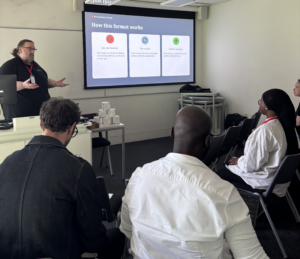
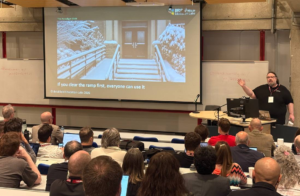
On a crisp November day, Further Education and Training professionals gathered at the Radisson Blu in Athlone for what attendees described as the “Glastonbury of Universal Design” – the inaugural Universal Design in FET event.
The atmosphere was electric with the kind of energy that only comes when passionate educators, administrators, and accessibility champions come together with a shared purpose.
The schedule was packed with workshops, lightning talks that packed punch in five-minute bursts, panel discussions, and countless coffee-break conversations where ideas sparked.
What struck me most was the generosity with which everyone shared their expertise, their challenges, and their innovations.
Here’s my summary of the sessions that I attended and the key insights.
Panel Discussion: Universal Design as a Core Principle
Panelists: Dr. Lindsay Malone, Blake Hodkinson, Helena Farrell, Erica Meslin
The morning panel brought together FET leaders to explore embedding universal design as a core principle rather than an afterthought. The panel acknowledged the sector’s strong appetite and momentum while recognising capacity challenges. The discussion revealed that UD has emerged organically from bottom-up practitioner initiatives but now needs top-down commitment and strategic resources. The panel emphasised that meeting educators where they are through professional learning is essential for sustainable change.
Key Takeaways:
- Everyone is a leader – All staff have responsibility to champion UD principles regardless of role or position.
- One small thing creates ripple effects – If each person makes one incremental change weekly, the cumulative sector-wide impact is transformative.
- Embed UD in strategic performance agreements – Incentivise and formalise UD implementation at the systems level.
- Increase research and data collection – Demonstrate UD’s impact to inform strategic objectives and attract funding.
Audio for Access: Using Audio to Level the Assessment Playing Field
Presenters: Thérèse Glannon and Ann Marie Keane – Laois Offaly ETB
Laois Offaly ETB presented an innovative solution addressing barriers in traditional exam reader accommodations. The team discovered that learners with reading difficulties can feel embarrassed in special rooms and were reluctant to ask readers to repeat information. Working collaboratively across access, quality assurance, and teaching teams, they developed a process where teachers record audio versions of exam questions that learners access through headphones on Moodle while maintaining academic integrity through safe exam browser.
Key Takeaways:
- Cross-functional collaboration drives innovation – Access officers identifying problems + QA developing technical solutions + teaching staff creating content = transformative results.
- Teacher voices matter – Learners preferred familiar teacher recordings over AI-generated speech, especially those with ASD.
- Universal design benefits all – System expanded beyond reasonable accommodations to be available to any learner who prefers auditory input.
- Maintain academic integrity – Safe exam browser prevents cheating while audio recordings provide accessibility.
Designing a Digital Space with Inclusion and Accessibility in Mind
Presenter: Sabrina Smart – ETBI FET Quality Development Officer
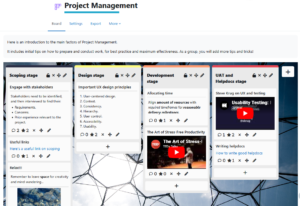
Sabrina Smart walked through the redesign of the ETBI FET External Authenticator Moodle space, demonstrating systematic application of the seven universal design principles. The redesign focused on eliminating unnecessary complexity through comprehensive content inventory, ensuring consistency in navigation, using plain English, and providing multiple means of representation with closed captions, transcripts, and screencast videos for every section so users can independently learn the system.
Key Takeaways:
- Start with a content inventory – Eliminate duplication and unnecessary complexity before adding new features.
- Multiple means of representation – Offer the same information as videos, downloadable checklists, and text instructions.
- Design for mobile access – External authenticators access materials from various locations and devices.
- Use plain Language intentionally – Requires discipline for “over writers” but dramatically improves accessibility.
Moodle and Brickfield Labs: Find, Fix and Future Proof
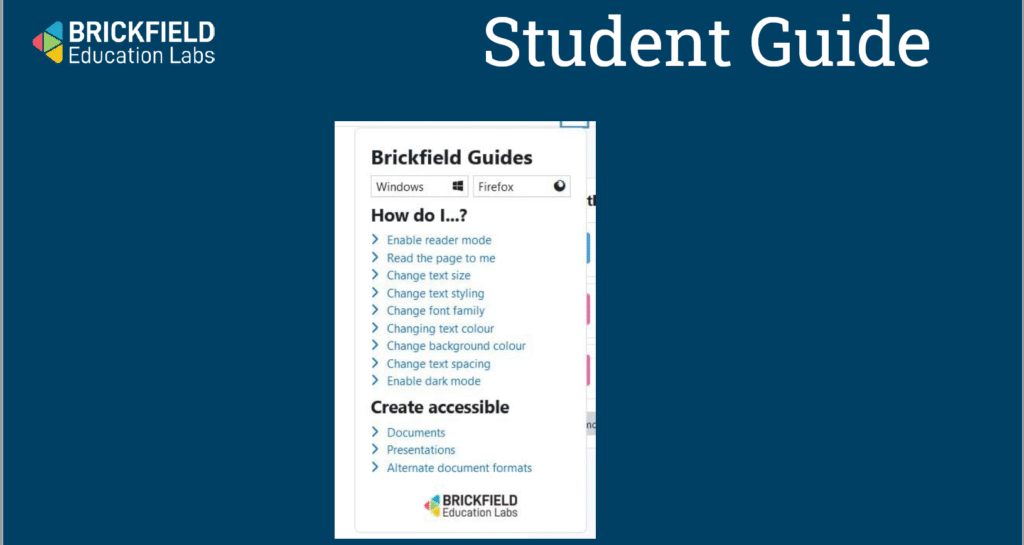
Presenters: Ciara Ní Fhloinn (Solas) and Gavin Henrick (Brickfield Education Labs CEO)
The Brickfield Accessibility Toolkit is now available free to all Solas-supported Moodle sites across the FET sector. Ciara positioned this as a response to widespread ETB requests for solutions to make legacy Moodle content accessible while building accessibility into future processes. Gavin’s demonstration emphasised the critical distinction between compliance and inclusion, noting that many people with needs don’t declare them – necessitating proactive accessibility design. The toolkit provides automated scanning against accessibility standards, identifies issues, providing explanations on impact, and offers bulk fix wizards to guide corrections while integrating directly with training resources.
Key Takeaways:
- Free for all Solas Moodle sites – Includes toolkit functionality and training academy access.
- Automated scanning saves time – Bulk operations for common fixes and detailed reports show what needs attention.
- Many don’t declare needs – Design for accessibility proactively rather than waiting for disclosure.
- Consistent course design is accessibility – Predictable navigation reduces cognitive load (the “box of chocolates” principle).
Digital Environment Pillar in Practice
Presenters: Danielle Duignan (Digital Media and Learning Officer, Ahead) and Erica Meslin (Education Manager, Ahead)
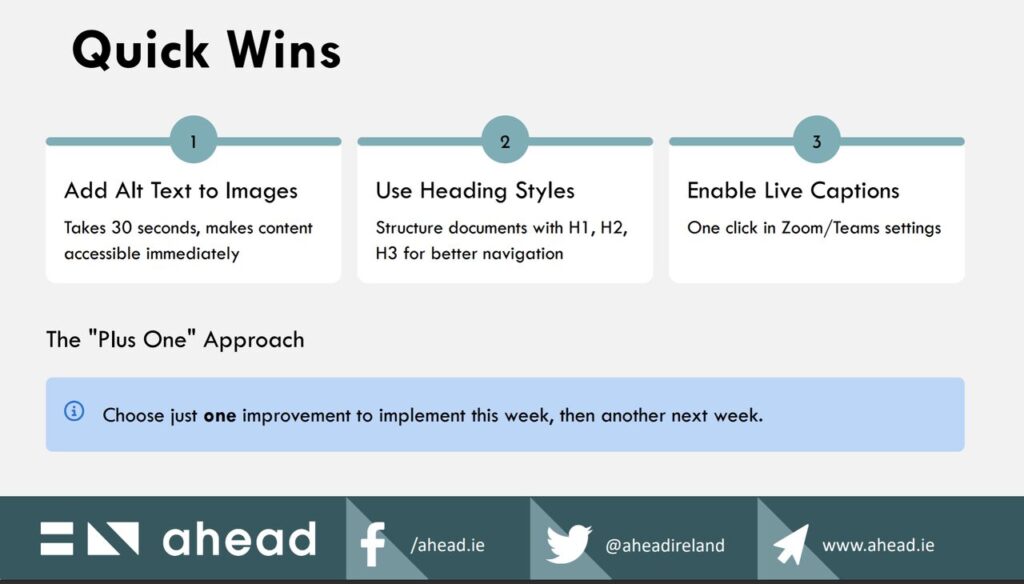
Danielle and Erica from Ahead used a “day in the life” approach to demonstrate the digital environment pillar of the Altitude Charter, mapping learner touchpoints from morning wake-up to evening homework. This user journey methodology identified barriers including checking announcements, logging into systems, accessing materials in various formats, completing digital exercises, and navigating between platforms. The session emphasised that digital accessibility should be naturally embedded into everyday working life rather than treated as an add-on, with quick wins like adding alt text, using proper heading styles, and enabling live captions providing immediate impact.
Key Takeaways:
- Three immediate actions you can take: Add alt text to images, use proper heading styles (not fake bold headings), enable live captions with one click.
- Don’t assess unrelated digital skills – If video submission isn’t a learning outcome, provide tutorials so assessment focuses on content knowledge.
- Good Wi-Fi is accessibility – Reliable connectivity is fundamental to digital inclusion.
- Ahead ARK courses are free – Seven self-paced courses available as SCORM packages for ETB Moodle sites.
Lightning Talks: Quick Hits of Universal Design Innovation
UD Champ for Apprenticeship
Joann Power, of Waterford Wexford ETB, presented an innovative approach to embedding UD support within apprenticeship training through a “UD Champ” role. Recognising that apprentices enter programs with varying educational backgrounds and that deficit-based discourse around learning differences was prevalent, Joanne created an informal professional learning “infiltrator” position. The UD Champ conducts assessments, connects with instructors about learning differences, facilitates positive conversations around interventions, supports material production with UDL principles, and shifts culture through passionate advocacy.
Key Takeaways:
- One person can create systemic change – A strategically positioned advocate shifts entire organisational culture through relationship-building.
- Shift from deficit to strength – Campaigns like “Be Proud of Your Dyslexic Mind” celebrate neurodiversity as positive attributes.
- Instructors now talk solutions – Culture shifted from discussing disabilities to discussing supportive interventions.
- Enjoyment requires belonging – Creating learning environments that engage and motivate is fundamental to UD vision.
College Connect: Accessibility at the Heart of the Learner Experience
Alan Byrne from City of Dublin ETB, introduced College Connect, a centralised SharePoint platform developed in direct response to student voice requesting a single repository for all information. With 12 colleges and thousands of learners across Dublin, students wanted one accessible location for student supports, disability services, neurodiversity resources, extracurricular activities, and academic information rather than navigating multiple fragmented systems. The development team prioritised accessibility from the beginning, ensuring the SharePoint site worked seamlessly across devices including mobile phone apps.
Key Takeaways:
- Student voice drives design – Survey data revealed learners wanted a central hub, so that’s what was built.
- Accessibility from day one – Building it in from the start is easier than retrofitting later.
- Mobile-first approach – SharePoint app provides on-the-go access for busy learners.
- Simplify, don’t complicate – Technology should reduce navigation challenges, not create new ones.
A Quick Guide to Plain English Communication
Gwen Moore, ETBI, delivered an entertaining lightning talk on plain English as universal design practice, acknowledging the FET sector’s tendency toward passive, bureaucratic language. Drawing on quotes from Mark Twain (“I didn’t have time to write a short letter, so I wrote a long one”), Coco Chanel, and Albert Einstein, Gwen emphasised that plain English is respecting readers by communicating so clearly they only need to read once. The presentation challenged passive voice habits like “an error was made” versus the active, accountable “we made a mistake.”
Key Takeaways:
- Plain English is respectful, not patronising – It requires discipline and hard work to communicate clearly.
- Active voice creates accountability – “We made a mistake” vs. “An error was made” – say who did what.
- FET loves passive language – Watch for constructions like “It was agreed at the forum” instead of “Directors agreed to…”.
- Transform modal verbs – Replace “is required to” with “must,” “is entitled to” with “can,” “is recommended to” with “should”.
Adult Literacy for Life: What’s in it for me?
Fionnuala Carter engaged the audience with an interactive activity using QR codes in multiple languages to create awareness of the lived experience of adults with literacy challenges. The exercise left many attendees uncertain how to proceed but reluctant to raise hands for help, powerfully illustrating how adults with unmet literacy needs navigate daily situations. Fionnuala revealed striking statistics: 21% of Irish adults have unmet reading needs, 25% struggle with numeracy, and 27% lack adequate digital skills – meaning these learners are present in every classroom and community setting.
Key Takeaways:
- One in five adults have unmet reading needs – They’re in every classroom, often invisible by choice.
- Become a literacy champion – Training available through regional coordinators, NALA, and Adult Literacy for Life website.
- Signpost, don’t just direct to classes – Know where to find support and how to improve your own practice.
- Plain English training is available – Multiple sources to help you communicate more accessibly.
Closing Remarks
Antonine Healey – FET Director, Longford Westmeath ETB
Antonine Healey brought the day to a close emphasising how the event itself embodied universal design principles through varied formats – speakers, panels, workshops, and lightning talks catering to different learning preferences. She synthesised key themes including the progress from 2004 when “universal design” wasn’t even terminology used, the recognition that there’s no “typical learner” in FET’s diverse sector, and the power of removing barriers to unlock potential. The closing captured memorable calls to action: Lindsay’s emphasis that all staff are leaders with UD responsibility, Blake’s suggestion to visit other centres to “plagiarise” good practices, and Helena’s reminder that progress matters more than perfection with everyone’s “one small thing” creating massive collective impact.
Key Takeaways:
- The event demonstrated UD principles – Multiple formats (speakers, panels, workshops, lightning talks) offered something for every learning style.
- Generous knowledge sharing – Speakers and facilitators openly shared ideas, expertise, challenges, and solutions for collective benefit.
- Collaboration starts within ETBs – Cross-functional teams (access, QA, teaching, management) working together drive the best outcomes.
- This is just the beginning – Hope for many more collaborative events where the sector learns from each other.
- We’re already doing UD – Much of this work is happening but not labelled or recognised – important to name and celebrate it.
Key Takeaways: What I'm Bringing Back
Remember back to last week, my mind is buzzing with possibilities. The beauty of universal design is that it doesn’t require massive budget allocations or complete system overhauls – it starts with awareness, intention, and small incremental changes that compound into transformative impact. Here are the key learnings I’m taking back to implement:
Strategic & Cultural Shifts:
- Everyone is a leader – Whether you’re in the classroom, a centre, or the board, you have responsibility and agency to champion UD and accessibility principles.
- Progress over perfection – It’s okay to make mistakes; continuous improvement matters more than waiting for the perfect solution.
- Bottom-up meets top-down – UD thrives when grassroots innovation is supported by strategic commitment and resources from leadership.
- Collaboration is key – The most successful implementations involved cross-functional teams (access officers, QA, teaching staff, IT) working together.
Practical Implementation Tips:
- Start with the “plus one” – If everyone implements one small change weekly, the cumulative sector-wide impact is enormous.
- Audio is transformative – Recording exam questions and learning materials in teachers’ voices provides inclusive access while maintaining academic integrity.
- Design for all from the start – It’s far easier to build accessibility into initial design than to retrofit later (apply the seven UD principles systematically).
- Consistency creates accessibility – Predictable navigation and structure across courses reduces cognitive load for all learners.
- Plain English is respect – Active voice, simple language, and clear communication helps ensure your message reaches everyone.
Tools & Resources Available Now:
- Brickfield Accessibility Toolkit – Available on all Solas Moodle ETB sites for automated scanning, issue identification, and remediation guidance.
- Ahead ARK Courses – Seven free self-paced courses on digital accessibility available as SCORM packages for integration into ETB Moodle sites.
- UDL Digital Badges – Both practitioner and senior leader levels available to demonstrate commitment and build expertise.
- Altitude Charter – Framework for structured UD implementation with the digital environment pillar providing clear guidance.
Quick Wins to Implement This Week:
- Add alternative text to all images (unless purely decorative).
- Use proper heading styles in Word/presentations instead of bold+large text.
- Enable live captions with one click in Teams/Zoom/Meet meetings.
- Visit another FET centre with “playful curiosity” to observe and adopt good practices.
- Put your UDL badge completion on LinkedIn to signal leadership commitment.
Mindset Shifts That Matter:
- 21% of adults have unmet reading needs – They’re in every classroom, often invisible. Design with them in mind from the start.
- Many people with learning needs don’t declare – Universal design proactively supports everyone rather than relying on disclosure.
- There is no “typical learner” – FET serves remarkably diverse cohorts; our design must reflect that reality.
- Reasonable accommodations and UD aren’t either/or – They work most effectively when combined, with UD reducing the need for individual accommodations.
The energy and commitment in that room in Athlone demonstrated that universal design in FET isn’t a fringe interest or compliance checkbox – it’s fundamental to our mission of creating accessible, inclusive learning opportunities that unlock potential for all. The appetite is there, and the community is ready to support each other.
What will your plus one be this week?