Building Lasting Change in Education: Breaking the Final Barrier to Accessibility
When we talk about accessibility in education, we often think about policies, tools, or compliance. But true, lasting change in accessibility goes far deeper — it’s about transforming culture, empowering people, and building strong foundations that ensure no learner is left behind.
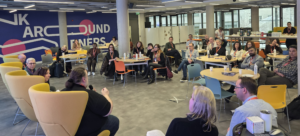
Two years ago, I spoke at the Digital Accessibility Conference at the University of Nottingham on “The Final Barrier”, I explored how schools, colleges, and universities can move beyond short-term initiatives and create a future where accessibility is embedded into the DNA of education.
This article reflects on the key themes from that session.
Why Accessibility in Education Matters
Accessibility in education is fundamentally about equity, and without it, institutions risk excluding or disadvantaging entire groups of learners. It is the gateway to participation, belonging, and success for all students, not just those with visible disabilities. Accessibility ensures that learning environments are fair, inclusive, and designed for everyone from the very beginning.
As highlighted by the joint letter from the U.S. Department of Justice and the Department of Education back in 2010, accessibility is about ensuring that a person with a disability can:
- Acquire the same information
- Engage in the same interactions
- Enjoy the same services
…in an equally effective, equally integrated manner, with substantially equivalent ease of use as a person without a disability.
Accessibility is not a “nice to have.” It’s a foundation of equity, fairness, and quality in education.

The Bridge to Lasting Change in Accessibility
Lasting change in accessibility requires a vision that can be translated into action, with every institution developing a clear pathway for embedding inclusion into its long-term strategy rather than relying on piecemeal efforts. Accessibility should not be seen as a project, but as a permanent cultural shift.
Throughout history, lasting change has required strong foundations. Accessibility in education is no different. To build a bridge from today to tomorrow, institutions need three keystones:
- Culture and Direction – Leadership must establish a vision and commit to it, embedding inclusivity into the core mission of the organisation.
- Tools – Institutions need the right systems and technologies to leverage change effectively.
- Skills and Knowledge – People across the institution must be trained, supported, and empowered to use these tools meaningfully.
Together, these elements form the structural supports for lasting accessibility in learning environments
Breaking Down Barriers to Accessibility

Barriers are not always obvious, and sometimes the most significant ones are cultural attitudes or outdated practices. Removing them requires persistence, collaboration, and a willingness to challenge assumptions across all levels of education.
- Creating lasting change requires institutions to intentionally break down barriers at every level. That means:
- Establishing a Vision and Commitment – Clear goals, communicated widely and often.
- Creating an Inclusive Culture – Accessibility isn’t just compliance; it’s belonging.
- Engaging and Empowering Stakeholders – From leadership to lecturers to learners, everyone has a role to play.
- Implementing Effective Change Management – Change doesn’t happen overnight; it requires patience, strategy, and consistency.
- Sustainable Structures and Support Systems – Build for the long-term, not just the next audit.
Embedding Best Practice in Accessibility
Best practice in accessibility doesn’t emerge by accident; it requires intentional design, investment in training, and leadership that models inclusive behaviour at every level of the institution. When best practice becomes habit, accessibility becomes part of everyday teaching and learning.
Accessibility becomes real when it is lived out in everyday practices. Institutions can embed best practice by:
- Identifying and addressing barriers in learning environments.
- Offering robust training and capacity building.
- Using technology and innovation to expand opportunities.
- Fostering collaboration and partnerships across departments and institutions.
- Monitoring progress and ensuring continuous improvement.

Advancing an Inclusive Curriculum
Curriculum is at the heart of the learner experience, and unless accessibility is built into design and delivery, students will continue to face barriers regardless of the policies or technologies in place. An inclusive curriculum benefits every learner, not only those with disabilities.
Accessibility must also extend to curriculum design. By integrating accessibility into the teaching and learning process, institutions ensure equity at the very heart of education. This includes:
- Applying Universal Design for Learning (UDL) principles.
- Ensuring accessible learning materials and technologies.
- Promoting inclusive teaching practices that support all learners.
- Actively engaging students in accessibility efforts.

Closing Thought on Lasting Change
The journey towards accessibility in education is not just about compliance or ticking boxes. It is about creating learning environments that truly welcome and empower every individual to succeed. Accessibility and inclusion are what transform education into a system that benefits all.
Imagine a world where learning is accessible to all. That world is possible — but it requires us to commit, collaborate, and act with intention. The final barrier isn’t technology or compliance. It’s our willingness to make accessibility part of who we are as educators and institutions.