Brickfield at TD3C: Reflections from the Panel
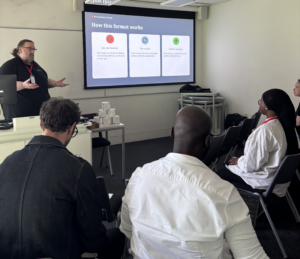
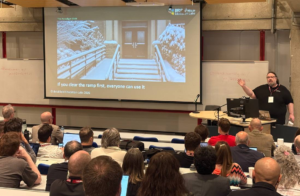
What a day the Empowering Teachers to Create Digital Content event was earlier this week. It was inspiring to be in a room full of educators from across Ireland, Italy, Finland, and Portugal who are passionate about transforming how teachers create digital content for their students.
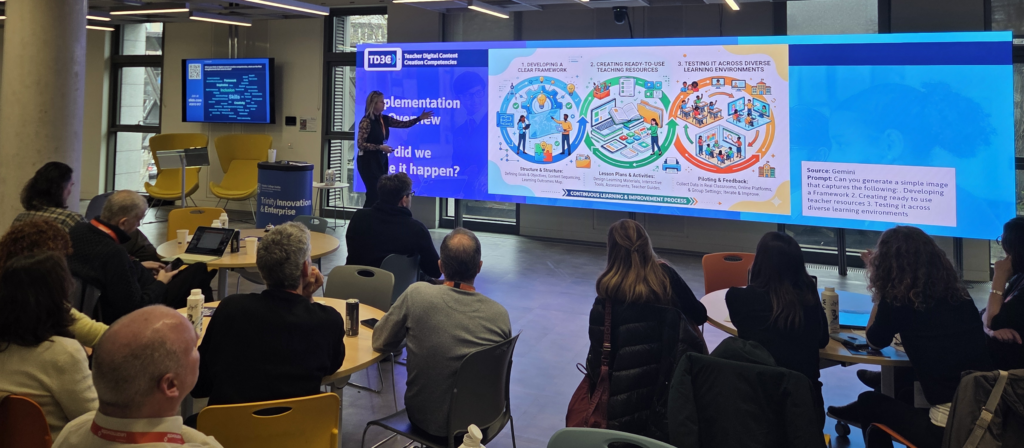
Empowering Teachers to Create Digital Content is the closing event of the TD3C project. TD3C stands for Teacher Digital Content Creation Competencies, a pan-European research project co-funded by Erasmus+ and led by Learnovate and the TCD (Trinity College Dublin) School of Education. Over the last two and a half years, the project has been working with educators across four countries to develop a practical framework that puts teachers at the centre of digital content creation and ultimately improves outcomes for every learner.
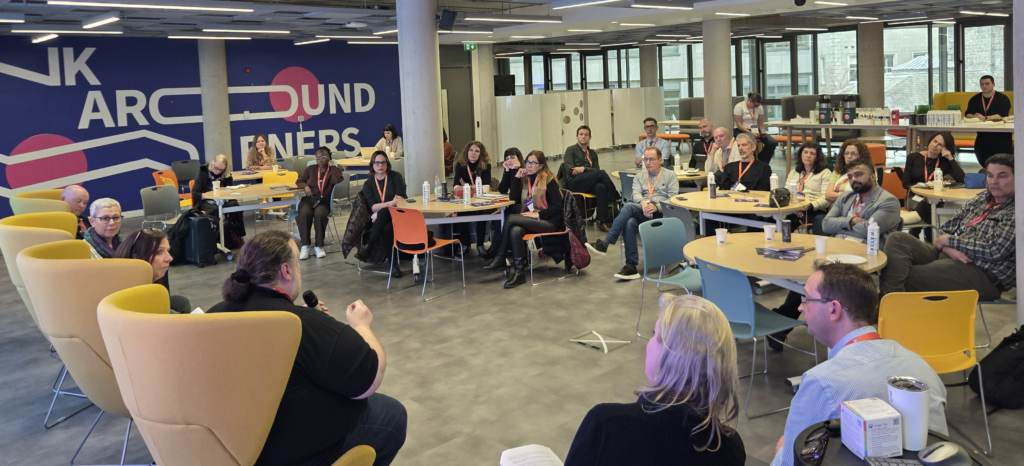
I was delighted to join the expert panel alongside Madeleine Murray from Oide Technology in Education, Alan Culbert, Deputy Principal of Edmund Rice College, and Rosa Doran from NUCLIO. The panel focused on four key areas: accessibility in content creation, copyright and AI, supports needed for teachers, and Universal Design for Learning. What follows are my fuller thoughts on those issues.
Accessibility is not an add-on, it's a baseline
For me there are three non-negotiable accessibility practices every teacher should follow when creating digital content. Use real heading structure, always provide a text alternative for non-text content, and check colour contrast, don’t guess. Simple in principle, but too often overlooked in practice.
The deeper issue is this. Accessibility is almost always the missing part. Teachers create content that works visually but fails silently for students using assistive technology, and often nobody tells them until it’s too late. If accessibility is not a baseline standard in content creation, you risk embedding inequality at scale.
Copyright in the age of AI
Copyright is becoming increasingly complex for teachers, and AI adds another layer of uncertainty. My advice is straightforward. If a resource doesn’t explicitly say it carries an open licence, assume it doesn’t. When in doubt, don’t use it. Default to Creative Commons. And when it comes to AI-generated content, check your institution’s policy, disclose AI use to students, and wherever possible, work from your own original material.
Supports needed for teachers
The biggest barrier for teachers transitioning to digital content creators is not always skills. It is confidence. And that is something that can be addressed with the right training, the right tools, and the right support. At Brickfield, it is something we see time and again, and it is at the heart of what we do.
Universal Design for Learning
Creating content that works for every learner from the outset is far more effective than retrofitting accessibility after the fact. When teachers apply Universal Design for Learning principles from the start, students with disabilities gain the most, and the quality of the content improves for everyone.
Why this matters to us at Brickfield
At Brickfield Education Labs, digital skills and accessibility in education are not optional extras. They are fundamental to ensuring every learner can participate fully. The TD3C project is a brilliant example of what it looks like when you put teachers at the centre of that mission, building their confidence and capacity, and ultimately improving outcomes for every student.
It was a wonderful way to mark the close of such an important European initiative. Congratulations to Learnovate, the TCD School of Education, and all the partners involved in bringing TD3C to life.